A filling machine is an important piece of equipment used in many industries. It helps businesses fill bottles, jars, pouches, tubes, and other containers with accurate amounts of products. These machines are commonly used in the food, beverage, pharmaceutical, cosmetic, chemical, and packaging industries.
Modern production requires speed, accuracy, and consistency. Manual filling can take a lot of time and may lead to product waste. A reliable filling machine can solve these problems by automating the process. It can improve production efficiency, reduce labor costs, and help maintain consistent product quality.
In this article, we will explain what a filling machine is, how it works, its major types, benefits, applications, and important factors to consider before choosing one.
What Is a Filling Machine?
A filling machine is packaging equipment designed to place a specific amount of liquid, powder, paste, cream, granules, or other materials into a container. Depending on the product and production needs, the machine can operate manually, semi-automatically, or fully automatically.
The main goal of a filling machine is accuracy. Every container should receive the correct amount of product. This helps companies maintain product quality and reduce unnecessary waste.
For example, a beverage company may use a liquid filling machine to fill bottles with juice. A cosmetic company may use a cream filling machine for lotions and face creams. Similarly, pharmaceutical companies can use specialized machines for medicines and other healthcare products.
How Does a Filling Machine Work?
The working process of a filling machine depends on its design and the type of material being filled. However, most machines follow a similar process.
First, empty containers are placed manually or automatically onto the machine. The product is then transferred from a storage tank or hopper into the filling system. The machine measures the required quantity and releases the product into each container.
After filling, the containers move to the next stage of production. This may include capping, sealing, labeling, coding, or packaging.
Advanced automatic filling machines use sensors and programmable controls. These features help improve accuracy and allow businesses to manage production more efficiently.
Types of Filling Machines
There are several types of filling machines available in the market. Each type is designed for specific products and production requirements.
Common types include:
- Liquid filling machines
- Powder filling machines
- Paste filling machines
- Piston filling machines
- Gravity filling machines
- Vacuum filling machines
- Auger filling machines
- Volumetric filling machines
- Automatic filling machines
- Semi-automatic filling machines
Choosing the correct machine depends on the product’s thickness, container type, filling speed, and required accuracy.
Liquid Filling Machines
A liquid filling machine is designed for products with a flowing consistency. These machines are commonly used for water, juice, milk, oil, sauces, chemicals, and cleaning products.
Different liquid products require different filling technologies. Thin liquids such as water may work well with gravity filling systems. Thicker products may require piston or pump filling systems.
Many liquid filling machines can handle different bottle sizes. This makes them useful for companies that offer multiple product packages.
Automatic liquid filling machines are especially helpful for businesses with high production volumes. They can fill many containers per minute while maintaining a consistent filling level.
Powder Filling Machines
Powder filling machines are used for dry and powdered products. Examples include flour, spices, coffee powder, protein powder, milk powder, and pharmaceutical powders.
These machines often use an auger system. The rotating auger controls the amount of powder released into each container. Accurate measurement is important because powders can have different densities and flow characteristics.
A good powder filling machine can reduce dust and product loss. It can also improve the cleanliness of the production area.
Businesses should choose a machine that matches their product type and packaging requirements.
Paste and Cream Filling Machines
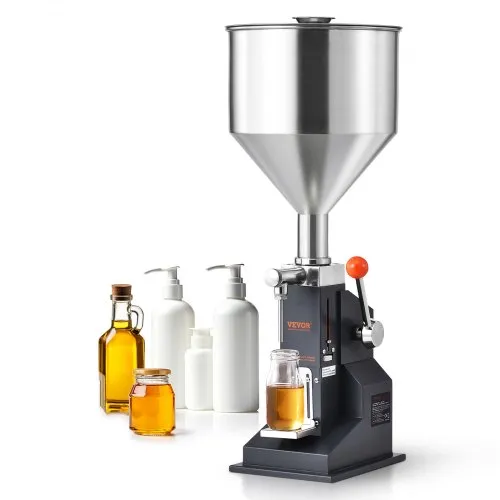
Paste filling machines are designed for thick and semi-thick products. They are commonly used for sauces, honey, creams, gels, lotions, toothpaste, and similar materials.
Piston filling technology is often used for these products. A piston draws a measured amount of material into a chamber and then pushes it into the container.
This type of filling machine provides good control and accuracy. It is suitable for products that do not flow easily through gravity-based systems.
The machine can also be customized based on the product’s viscosity and the required production speed.
Automatic vs. Semi-Automatic Filling Machines
Businesses can choose between semi-automatic and fully automatic systems.
A semi-automatic filling machine requires an operator to place or remove containers. The machine performs the filling process after being activated. This option is often suitable for small and medium-sized businesses.
A fully automatic filling machine performs most production steps automatically. Containers move through the system using a conveyor. The machine detects the containers, fills them, and sends them to the next packaging stage.
Automatic systems are ideal for large-scale production. Although the initial investment may be higher, they can increase long-term productivity and reduce labor requirements.
Benefits of Using a Filling Machine
Using a professional filling machine offers several important benefits.
First, it improves production speed. Machines can fill containers much faster than manual methods. This allows businesses to meet larger customer demands.
Second, a filling machine improves accuracy. Consistent filling reduces product waste and helps maintain the correct package quantity.
Third, automation can reduce labor costs. Employees can focus on quality control, maintenance, and other important tasks.
Other major benefits include:
- Improved product consistency
- Reduced product waste
- Better hygiene
- Faster production
- Increased efficiency
- Easier scaling
- Improved packaging quality
These advantages make filling equipment a valuable investment for many manufacturers.
Industries That Use Filling Machines
Filling machines are used in a wide range of industries.
The food and beverage industry uses them for water, juice, sauces, oils, dairy products, spices, and other products. The cosmetic industry uses them for creams, shampoos, lotions, perfumes, and gels.
Pharmaceutical companies use specialized filling equipment for medicines, syrups, capsules, and other healthcare products.
The chemical industry also depends on filling machines for detergents, lubricants, cleaning liquids, and industrial products.
Because every industry has different requirements, manufacturers often provide customized filling solutions.
Important Factors When Choosing a Filling Machine
Choosing the right filling machine requires careful planning. The first factor to consider is the product type. Thin liquids, thick pastes, powders, and granules require different filling systems.
Production capacity is another important factor. A small business may only need a few hundred containers per hour, while a large factory may require thousands.
You should also consider container size and shape. Some machines are designed for bottles, while others work with jars, tubes, pouches, or other packaging formats.
Other important factors include filling accuracy, cleaning requirements, automation level, available factory space, maintenance needs, and future expansion plans.
Maintenance and Cleaning of Filling Equipment
Regular maintenance is important for keeping a filling machine in good working condition. Operators should inspect important components and replace worn parts when necessary.
Cleaning is especially important in food, cosmetic, and pharmaceutical production. Product residue can affect machine performance and create hygiene problems.
Many modern machines are designed for easier cleaning. Some systems include stainless steel components and sanitary designs.
Businesses should follow the manufacturer’s maintenance instructions. Proper care can extend the machine’s service life and reduce unexpected downtime.
How Filling Machines Improve Production Efficiency
Production efficiency is essential for modern businesses. A filling machine helps create a faster and more organized production process.
Automation reduces repetitive manual work. It also helps maintain a consistent filling quantity across every package. This consistency can improve customer satisfaction and reduce quality-control problems.
As production demand grows, businesses can upgrade to faster or more advanced equipment. Some machines can also be integrated with capping, labeling, sealing, and packaging systems.
This creates a complete automated production line that saves time and supports business growth.
The Future of Filling Machine Technology
Filling machine technology continues to improve. Modern equipment includes advanced sensors, digital controls, touch-screen interfaces, and automated monitoring systems.
Smart machines can help manufacturers track production performance and identify potential problems. Improved automation may also reduce downtime and increase accuracy.
Sustainability is becoming another important area. Manufacturers are developing machines that reduce energy use and minimize product waste.
As packaging technology continues to develop, filling equipment will play an even bigger role in efficient and reliable manufacturing operations.
Conclusion
A filling machine is an essential investment for businesses that need accurate, fast, and reliable product packaging. Whether a company produces liquids, powders, creams, pastes, or granules, there is a filling solution designed for its specific needs.
The right machine can improve production speed, reduce waste, increase filling accuracy, and support consistent product quality. Businesses should consider their product type, production volume, container design, and future growth before making a decision.
By selecting the right filling machine and maintaining it properly, manufacturers can create a more efficient production process and build a stronger foundation for long-term business growth.
Frequently Asked Questions
What is a filling machine used for?
A filling machine is used to accurately fill containers with products such as liquids, powders, creams, pastes, and granules.
Which filling machine is best for liquids?
The best option depends on the liquid. Gravity fillers are often suitable for thin liquids, while piston or pump fillers can work better for thicker products.
Can one filling machine handle different container sizes?
Many modern machines can be adjusted to work with different container sizes and shapes, depending on their design.
Is an automatic filling machine better than a semi-automatic machine?
Automatic machines are generally better for high-volume production. Semi-automatic machines can be more suitable for smaller businesses and lower production requirements.
How can I choose the right filling machine?
Consider your product type, viscosity, production capacity, filling accuracy, container design, budget, and automation requirements.
How often should a filling machine be maintained?
Maintenance schedules depend on machine usage and manufacturer recommendations. Regular inspection, cleaning, and replacement of worn parts can help maintain reliable performance.