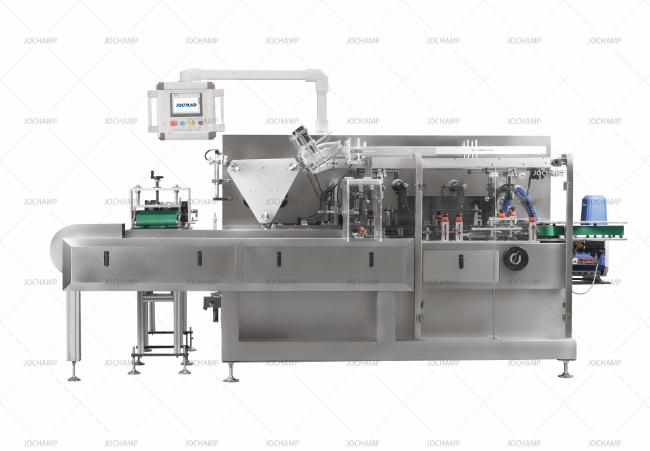
An 80-120 PPM Shisha Cartoning Machine is a high-speed automated packaging system designed to place shisha products into cartons at production rates of approximately 80 to 120 packs per minute. It is developed for manufacturers that need reliable, consistent, and efficient secondary packaging while maintaining accurate carton forming, product loading, and sealing.
Modern packaging facilities increasingly depend on automation to reduce repetitive manual work and improve production consistency. A suitable cartoning machine can coordinate several operations in one continuous process, including carton feeding, opening, product insertion, carton closing, and batch coding.
For manufacturers handling large production volumes, selecting the right cartoning equipment requires careful consideration of product dimensions, carton specifications, production speed, machine flexibility, and maintenance requirements.
What Is an 80-120 PPM Shisha Cartoning Machine?
An 80-120 PPM Shisha Cartoning Machine is an automated cartoning system capable of handling approximately 80 to 120 packages per minute, depending on the product format, carton design, and machine configuration.
The term PPM generally means “packs per minute.” It provides manufacturers with a basic indication of production capacity.
The machine is designed to automate the process of placing shisha-related products into prepared cartons. Instead of relying on operators to manually fold cartons and insert products, the machine performs these repetitive tasks through synchronized mechanical and electronic systems.
This type of equipment is particularly useful for production environments where packaging speed and consistency are important.
How Does a Shisha Cartoning Machine Work?
The cartoning process normally begins with a supply of flat cartons. The machine separates individual cartons and opens them into their required shape.
At the same time, the product is transferred toward the loading station. Sensors and guides help maintain the correct product position.
The product is then inserted into the open carton. Depending on the machine design, insertion may be performed horizontally or vertically.
Once loading is completed, the carton moves to the closing section. Folding mechanisms close the appropriate flaps, and the carton may be sealed using tuck-in flaps, adhesive, or another specified method.
The finished carton is then discharged from the machine and transferred to the next packaging stage.
Main Stages of the Cartoning Process
An automated cartoning line generally includes several important stages.
Carton feeding supplies flat cartons from a magazine.
Carton opening forms each flat carton into its required three-dimensional shape.
Product feeding moves products toward the loading station.
Product insertion places the product accurately inside the carton.
Carton closing folds the required flaps into position.
Sealing secures the carton when adhesive or another closure method is required.
Discharge transfers completed packages toward downstream equipment.
Some systems can also integrate printing, coding, weighing, inspection, and rejection functions.
Important Components of the Machine
Several components work together to achieve reliable cartoning performance.
The carton magazine stores flat cartons and supplies them to the feeding mechanism.
The carton opening system uses mechanical components or vacuum technology to open cartons accurately.
The product conveyor transports products to the loading area at a controlled rate.
The loading mechanism places products into cartons. Its design depends on product dimensions and packaging format.
The carton closing system folds flaps and prepares the package for final sealing.
A control system coordinates machine timing and monitors operating conditions.
Sensors are also important. They can detect missing cartons, incorrectly positioned products, or other production conditions that could affect packaging quality.
Why 80-120 PPM Capacity Matters
A production capacity of 80-120 PPM provides manufacturers with a high level of packaging output. However, actual production depends on product size, carton style, machine configuration, and operating conditions.
For businesses handling substantial production volumes, this speed can reduce packaging bottlenecks. It can also help synchronize cartoning with upstream filling, weighing, or product preparation equipment.
A machine should not be selected based only on its maximum rated speed. Consistent performance, changeover time, downtime, product handling accuracy, and maintenance requirements are equally important.
A reliable machine operating at an appropriate speed can deliver better overall productivity than equipment that frequently stops.
Product and Carton Compatibility
Product and carton compatibility is essential when selecting cartoning equipment.
Engineers need to consider the product’s length, width, height, weight, shape, and packaging format. The carton must provide enough internal space without allowing excessive movement.
Carton material and thickness can also influence machine performance. Poorly manufactured cartons may cause feeding or opening problems.
Before production begins, manufacturers should confirm carton dimensions and test the complete packaging format.
Proper compatibility can reduce jams, misfeeds, damaged cartons, and unnecessary production interruptions.
Automatic Carton Feeding System
The carton feeding system plays an important role in high-speed cartoning. Flat cartons are usually stored in a magazine before entering the machine.
An automated mechanism separates individual cartons and transfers them toward the opening station.
At higher production speeds, consistent feeding becomes especially important. A single feeding error can interrupt the packaging cycle.
Sensors can monitor carton availability and position. When the carton supply becomes low or an error occurs, the control system can alert the operator.
Reliable carton feeding helps maintain a stable production flow.
Product Loading and Positioning
Accurate product positioning is another important part of cartoning.
The product must arrive at the loading station at the correct time. Guides, conveyors, sensors, and mechanical systems help coordinate product movement.
Depending on the product design, the machine may use a pushing system or another automated loading mechanism.
Incorrect positioning can result in damaged products, incomplete insertion, or carton jams.
For this reason, the loading system should be designed specifically around the product format and expected production speed.
Carton Closing and Sealing
After product insertion, the carton needs to be properly closed. The closing process may involve folding several flaps in a predetermined sequence.
Some cartons use tuck-in closures, while others require adhesive sealing. The machine should be configured according to the carton design.
Consistent closing helps create a professional package appearance and reduces the possibility of cartons opening during transportation.
If adhesive is used, application accuracy is important. Excess adhesive can affect package appearance, while insufficient adhesive may reduce closure reliability.
Benefits of High-Speed Cartoning Equipment
An 80-120 PPM Shisha Cartoning Machine can provide several advantages for suitable production environments.
One major benefit is improved packaging productivity. Automated equipment can process large quantities with less manual intervention.
Other advantages include:
- Consistent carton formation
- Accurate product insertion
- Reduced repetitive labor
- Improved packaging speed
- Better production consistency
- Reduced handling
- Integration with production lines
- Consistent carton presentation
Automation can also make production easier to monitor because machine controls can track operating conditions and identify certain faults.
Quality Control and Machine Accuracy
Quality control is essential in automated cartoning. A package should contain the correct product and have properly formed and closed cartons.
Sensors can help identify missing products or cartons. Advanced systems may use vision inspection to check package characteristics.
Operators should also conduct regular quality checks throughout production.
Important inspection points may include carton dimensions, product placement, closure quality, printing, coding, and overall package appearance.
Maintaining consistent quality reduces rejected packages and helps prevent downstream packaging problems.
Machine Flexibility and Changeovers
Manufacturers may need to package different product sizes or carton formats. Machine flexibility therefore becomes an important consideration.
Quick-change tooling and adjustable guides can reduce the time required to switch between formats.
A well-designed machine should allow operators to make necessary adjustments without complicated procedures.
Clear changeover instructions and digital settings can further improve production efficiency.
Maintenance and Operator Training
Regular maintenance helps keep an 80-120 PPM Shisha Cartoning Machine operating reliably.
Operators should inspect carton feeding components, conveyors, sensors, loading mechanisms, folding systems, and sealing equipment according to the manufacturer’s recommendations.
Cleaning is also important because dust and packaging debris can interfere with moving parts and sensors.
Preventive maintenance can identify worn components before they cause unexpected downtime.
Proper operator training is equally important. Employees should understand machine controls, safety procedures, product changeovers, and basic troubleshooting.
How to Choose the Right Cartoning Machine
Businesses should evaluate several factors before investing in cartoning equipment.
First, determine the required production capacity. If the target output falls within the 80-120 PPM range, the machine should be tested under actual product and carton conditions.
Next, examine product dimensions and carton specifications. The equipment must handle the required formats accurately.
Other factors include:
- Machine footprint
- Automation level
- Changeover time
- Carton material compatibility
- Product feeding method
- Sealing technology
- Safety features
- Maintenance requirements
- Spare parts availability
- Technical support
A detailed evaluation can help ensure that the machine meets both current and future production requirements.
Improving Packaging Line Efficiency
A high-speed cartoning machine performs best when the entire packaging line is properly balanced.
Upstream equipment should provide products at a suitable rate. Downstream systems should also be capable of handling the machine’s output.
Preventive maintenance can reduce unexpected stoppages. Operators can monitor production data to identify frequent jams, carton waste, or product-loading problems.
Using properly manufactured cartons and maintaining accurate product feeding can further improve efficiency.
Regular training and clear operating procedures also help maintain consistent production performance.
Conclusion
An 80-120 PPM Shisha Cartoning Machine can provide an efficient solution for manufacturers seeking automated, high-volume secondary packaging. By combining carton feeding, opening, product loading, closing, sealing, and discharge operations, the machine can reduce manual work while improving packaging consistency.
The best equipment should be selected according to product dimensions, carton specifications, desired production capacity, automation requirements, and maintenance needs.
With suitable machine configuration, reliable materials, trained operators, and regular preventive maintenance, high-speed cartoning equipment can support a stable and efficient packaging operation while maintaining consistent package quality.