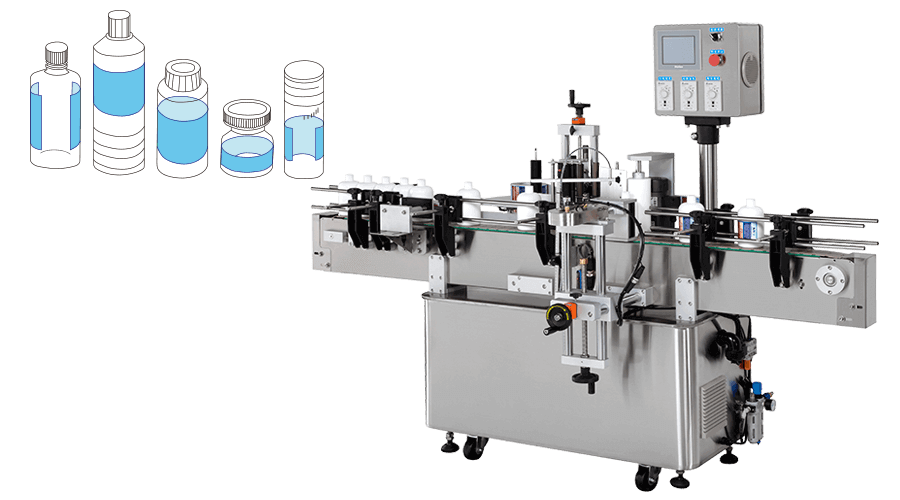
In the fast-paced world of packaging and manufacturing, first impressions on the retail shelf are everything. Product presentation must be flawless, and regulatory details must be highly legible. For any brand that relies on cylindrical containers, such as bottles, cans, jars, or vials, achieving this standard of excellence consistently requires specialized equipment. This is where the Wrap Around Labeling Machine comes into play.
Designed specifically to apply self-adhesive labels to the curved surfaces of round objects, this machine is a cornerstone of modern packaging lines. It ensures that your labels are perfectly centered, free of wrinkles, and applied at high speeds. Whether you are a small business looking to transition from manual labeling or a large-scale manufacturing plant seeking to optimize your existing throughput, understanding this technology is key to choosing the right solution.
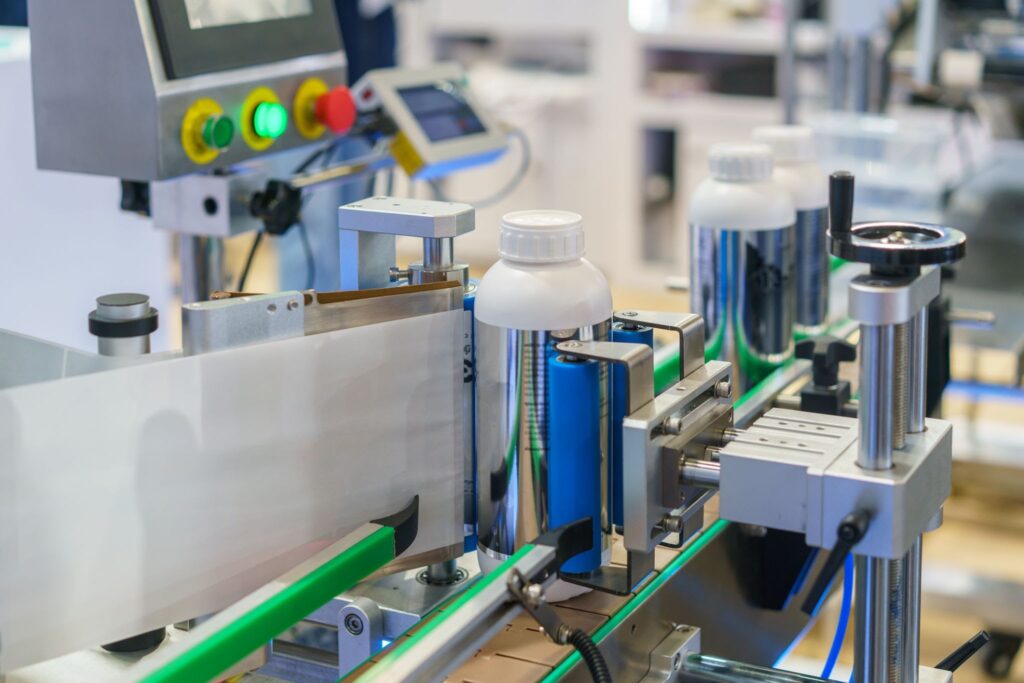
An automated wrap-around labeling system in action on a busy packaging line. Source: ake1150sb / Getty Images
Understanding the Wrap Around Labeling Machine
The wrap around labeling machine is a dedicated packaging system designed to apply pressure-sensitive, roll-fed labels around the circumference of cylindrical containers. Unlike standard labeling systems that merely press a stamp label onto a flat face, wrap-around systems are built to wrap either a portion of the container or its entire 360-degree surface.
By rolling the label directly onto the container as it rotates, this mechanism prevents the common pitfalls of manual application, such as misalignment, air bubbles, and edge peeling. Because round containers lack flat surfaces to anchor a basic press-on label, the rolling motion is vital to maintaining uniform tension across the entire surface of the label, ensuring a smooth, secure bond.
How the Wrap Around Labeling Process Works
The machinery operates through a carefully synchronized series of steps that occur within a matter of seconds. The entire process begins when containers are fed onto the main conveyor belt. To ensure that the machine does not face a bottleneck, a spacing mechanism or separator wheel creates precise gaps between each incoming container.
As each container reaches the labeling station, highly sensitive photoelectric sensors detect its leading edge and trigger the label dispenser to release a label at the exact microsecond required. The label is gently peeled from its backing paper and presented directly to the rotating container.
Once the adhesive edge makes contact, the container is spun—either by a specialized wrap-on belt, a pair of roller prisms, or a secondary backing pad. This spinning action wraps the label cleanly around the body of the container. Finally, soft foam rollers or pressure belts wipe down the exterior of the container to smooth out trapped air and firmly set the adhesive.
The Core Types of Wrap Around Labeling Machines
Depending on production capacity, facility space, and accuracy requirements, manufacturers typically choose from a few distinct types of wrap-around systems.
Semi-Automatic Wrap Around Labelers are ideal for small-scale operations, laboratories, craft breweries, and boutique cosmetics brands. In this setup, an operator manually places the bottle or container into a cradle and presses a foot pedal or hand switch to start the labeling cycle. The machine spins the product, applies the label, and then the operator removes the finished container manually. This method is highly affordable and portable, though it is limited by manual speed constraints.
In-Line Linear Wrap Around Systems represent the standard for mid-to-high-speed automated production. These systems allow containers to move continuously along a conveyor without stopping. A driving belt presses the container against a static backing pad, causing it to spin and pick up the label as it travels. Because the linear movement never stops, these machines can reach incredibly high speeds, making them perfect for high-volume consumer goods.
Three-Roller Wrap Around Systems are engineered for scenarios where precision is the absolute top priority. In this configuration, pneumatic gates temporarily halt the forward movement of each bottle. A three-point roller assembly then clamps the bottle, spinning it perfectly in place while the label is applied. While this slightly limits the overall throughput compared to continuous linear systems, it completely eliminates spiral misalignment and bubbling, even on poorly manufactured or slightly imperfect glass containers.
Key Operational Benefits of Automation
Transitioning to an automated wrap around system offers remarkable upgrades to any packaging line, first and foremost by reducing manual labor costs and eliminating human error. A single automated unit can perform the work of multiple manual workers with unmatched consistency, allowing team members to be redeployed to higher-value roles.
Another major benefit is the reduction in material waste. Crooked labels on premium packaging often force manufacturers to discard the container, peel off the label, or scrape the bottle, wasting both valuable inventory and labels. The extreme precision of automatic sensory alignment ensures that every single sticker is applied flawlessly on the first try.
Furthermore, these machines offer rapid changeover times. Most modern systems feature tool-less adjustments, meaning operators can switch between labeling small cosmetic vials to large gallon-sized chemical bottles in a matter of minutes simply by adjusting conveyor rails and setting new parameters on an intuitive touchscreen interface.
Major Industry Applications
The versatility of wrap-around labelers makes them a critical asset across a diverse array of sectors.
In the pharmaceutical and medical industries, compliance is strict. Vials, syrup bottles, and tablet tubes require clear, highly accurate labeling to communicate correct dosage instructions, warnings, and serial numbers. Wrap-around labelers maximize the printable surface area on tiny vials so that all critical data remains fully legible.
The food and beverage sector utilizes these systems extensively for water bottles, wine bottles, condiment jars, and craft beer cans. Because these containers often encounter moisture or cold temperatures, the machine’s ability to apply waterproof synthetic labels smoothly ensures the branding remains intact through the entire supply chain.
In cosmetics and personal care, where aesthetic presentation directly impacts consumer trust and luxury branding, these machines apply flawless, sleek labels onto lotion pump bottles, essential oil containers, and cream jars with zero bubbling or skew.
Factors to Consider When Selecting a Machine
To choose the perfect wrap around labeler for your facility, several crucial variables must be evaluated. First, analyze your container range and materials. You must verify that the conveyor and rollers can handle your smallest and largest container diameters, and whether the material is rigid glass, PET plastic, or flexible metal.
Next, consider your required production speed. You should choose a system that matches or slightly exceeds your current filling and capping equipment to avoid creating a new bottleneck on the line.
Finally, plan for data integration. Many industries require the printing of real-time expiration dates, batch numbers, or barcodes directly onto the label during the application process. Choosing a labeling machine that seamlessly integrates thermal transfer or inkjet printer heads will save you from having to run your products through a secondary printing line.
Conclusion
Investing in a wrap around labeling machine is one of the most effective decisions a growing business can make to elevate its packaging department. By replacing unpredictable manual processes with automation, brands gain a dramatic boost in overall production speed, visual consistency, and shelf appeal. Whether you opt for a highly accurate three-roller system or a high-speed linear model, this machinery provides a reliable and scalable foundation that protects your brand identity and keeps your production line running smoothly.