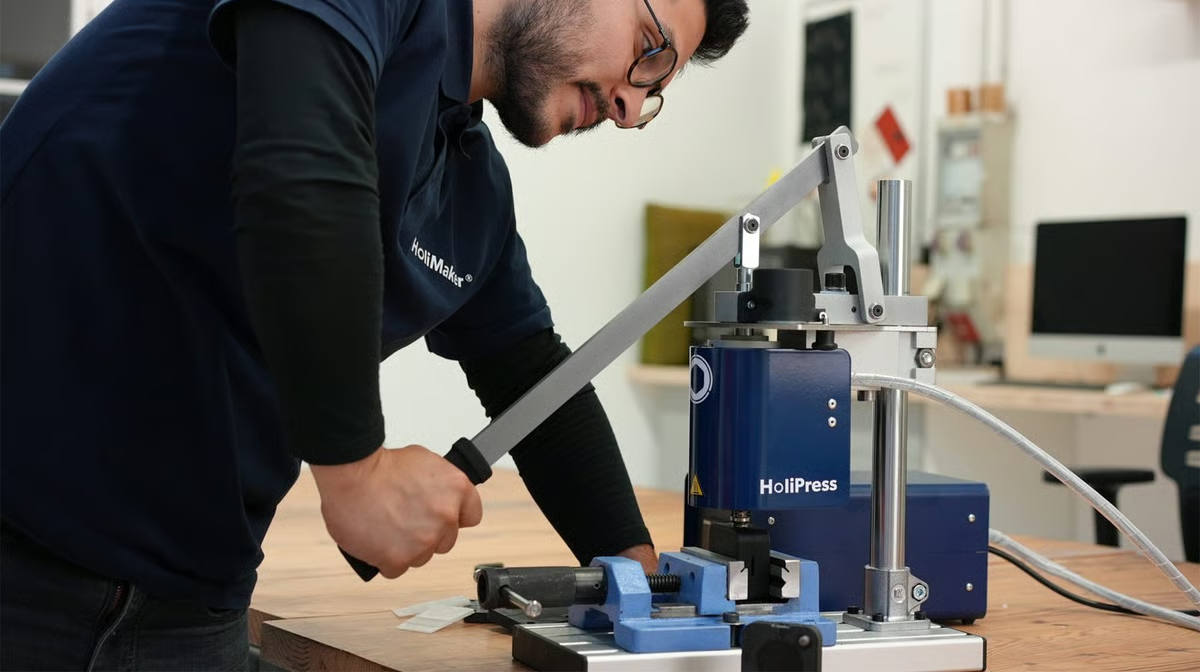
A desktop injection molding machine is transforming the way hobbyists, engineers, product designers, and small businesses create plastic parts. Unlike large industrial machines, desktop models are compact, affordable, and designed to fit on a workbench. They allow users to produce prototypes, custom components, and small production runs without investing in expensive manufacturing equipment.
As demand for rapid prototyping and low-volume production grows, desktop injection molding machines have become popular in workshops, schools, maker spaces, and research laboratories. They combine precision, efficiency, and ease of use, making plastic part manufacturing more accessible than ever before.
This guide explains how desktop injection molding machines work, their benefits, applications, key features, and tips for selecting the right model.
What Is a Desktop Injection Molding Machine?
A desktop injection molding machine is a compact version of a traditional injection molding system. It melts plastic pellets and injects the molten material into a mold under pressure. Once the plastic cools and solidifies, the mold opens to reveal the finished part.
These machines are much smaller than industrial equipment but use the same basic manufacturing principles. Their compact size makes them ideal for educational institutions, prototype development, and small-scale manufacturing projects.
How a Desktop Injection Molding Machine Works
The injection molding process follows several simple steps.
- Plastic pellets are loaded into the hopper.
- A heating chamber melts the plastic material.
- The molten plastic is injected into a prepared mold.
- The mold cools until the plastic solidifies.
- The finished part is removed from the mold.
- The process repeats for additional parts.
Because the cycle is relatively fast, users can produce multiple identical components with excellent consistency.
Benefits of Using a Desktop Injection Molding Machine
Choosing a desktop injection molding machine offers numerous advantages.
- Compact design saves workspace.
- Lower cost than industrial machines.
- Excellent for rapid prototyping.
- Produces repeatable, accurate parts.
- Suitable for educational environments.
- Reduces outsourcing costs.
- Supports small production batches.
- Easy to learn and operate.
- Compatible with many thermoplastic materials.
- Faster production than many 3D printing methods for repeated parts.
These benefits make desktop injection molding an attractive option for innovators and entrepreneurs.
Common Applications
Desktop injection molding machines serve a wide range of industries and projects.
Product Development
Designers quickly test new product ideas before moving to mass production.
Educational Training
Universities and technical schools use these machines to teach manufacturing principles.
Prototype Manufacturing
Companies create functional plastic prototypes for testing and evaluation.
Custom Plastic Parts
Small businesses manufacture specialized components in limited quantities.
Research Laboratories
Researchers develop experimental products and engineering solutions using custom molds.
DIY Projects
Makers and hobbyists create replacement parts, accessories, and personalized products.
Materials Used in Desktop Injection Molding
Most desktop injection molding machines process common thermoplastics.
Popular materials include:
- ABS (Acrylonitrile Butadiene Styrene)
- Polypropylene (PP)
- Polyethylene (PE)
- Nylon (PA)
- Polystyrene (PS)
- TPU (Thermoplastic Polyurethane)
- Polycarbonate (PC)
- Acetal (POM)
Each material offers different characteristics such as strength, flexibility, heat resistance, or impact resistance.
Key Features to Consider
Before purchasing a desktop injection molding machine, evaluate these important features.
Injection Pressure
Higher injection pressure allows the machine to fill complex molds more effectively.
Temperature Control
Accurate temperature settings improve material quality and reduce manufacturing defects.
Clamping Force
Adequate clamping force prevents mold separation during injection.
Mold Compatibility
Ensure the machine supports molds that match your project requirements.
Ease of Operation
User-friendly controls help beginners operate the machine safely and efficiently.
Build Quality
Durable metal construction provides better long-term reliability than lightweight alternatives.
Safety Features
Emergency stop buttons, heat protection, and safety shields reduce workplace risks.
Desktop Injection Molding Machine vs. 3D Printing
Both technologies are valuable, but they serve different purposes.
| Feature | Desktop Injection Molding Machine | 3D Printing |
| Production Speed | Fast after mold creation | Slower for multiple parts |
| Part Consistency | Very consistent | Slight variation possible |
| Material Strength | High | Depends on printing method |
| Initial Setup | Requires mold | No mold required |
| Best For | Small production runs | One-off prototypes |
| Unit Cost | Low for larger batches | Higher for repeated production |
Many product developers use both technologies together during product development.
Industries That Benefit Most
Several industries regularly use desktop injection molding machines.
- Consumer products
- Medical device prototyping
- Automotive component development
- Electronics manufacturing
- Robotics
- Educational institutions
- Engineering firms
- Industrial design studios
- Research facilities
- Startup companies
Their flexibility makes them useful across many sectors.
Tips for Choosing the Best Desktop Injection Molding Machine
Selecting the right machine depends on your goals.
Consider these factors:
- Determine your production volume.
- Choose compatible plastic materials.
- Check maximum mold dimensions.
- Compare heating capabilities.
- Review maintenance requirements.
- Evaluate available customer support.
- Read user reviews before purchasing.
- Compare warranty coverage.
- Ensure replacement parts are available.
- Set a realistic budget.
Making a careful comparison helps ensure a worthwhile investment.
Maintenance Best Practices
Proper maintenance keeps a desktop injection molding machine operating efficiently.
Recommended maintenance includes:
- Clean the barrel regularly.
- Remove leftover plastic after each session.
- Lubricate moving components.
- Inspect electrical connections.
- Monitor heating elements.
- Check mold alignment.
- Replace worn seals when necessary.
- Store the machine in a clean, dry environment.
Routine care improves machine lifespan and production quality.
Common Mistakes to Avoid
New users often make avoidable errors.
Avoid these common mistakes:
- Using incorrect processing temperatures.
- Choosing unsuitable plastic materials.
- Overfilling the mold.
- Skipping regular maintenance.
- Ignoring safety procedures.
- Using damaged molds.
- Applying excessive injection pressure.
- Removing parts before complete cooling.
Learning proper operating techniques helps achieve better results.
Future of Desktop Injection Molding Machines
Advancements in automation, digital controls, and energy-efficient heating systems continue to improve desktop injection molding machines. Modern models offer touchscreen interfaces, programmable settings, and better temperature accuracy. As manufacturing technology evolves, these compact machines are becoming more capable, affordable, and accessible for professionals and hobbyists alike.
The combination of desktop injection molding with CAD software, CNC-machined molds, and rapid prototyping workflows is enabling faster product development while reducing production costs.
Frequently Asked Questions
What is a desktop injection molding machine used for?
It is used to manufacture plastic parts, prototypes, and small production batches using injection molding technology.
Can beginners use a desktop injection molding machine?
Yes. Many entry-level models are designed with simple controls and safety features, making them suitable for beginners after proper training.
Which plastics work best?
Common thermoplastics such as ABS, polypropylene, polyethylene, nylon, and TPU are widely used.
Is injection molding better than 3D printing?
For producing many identical parts, injection molding is generally faster and more cost-effective. For one-off prototypes, 3D printing is often the better choice.
How long does a molding cycle take?
Most molding cycles take anywhere from a few seconds to several minutes, depending on the material, mold complexity, and cooling time.
Are desktop injection molding machines expensive?
Prices vary by size and capability, but desktop models are significantly more affordable than industrial injection molding systems, making them accessible to startups, schools, and small businesses.
Conclusion
A desktop injection molding machine is an excellent investment for anyone interested in efficient, small-scale plastic manufacturing. Its compact size, affordability, and ability to produce consistent, high-quality parts make it ideal for product designers, engineers, educators, and entrepreneurs. By understanding how these machines work, selecting the right features, using suitable materials, and following proper maintenance practices, users can maximize productivity while reducing manufacturing costs. As technology continues to advance, desktop injection molding machines will remain an essential tool for innovation, rapid prototyping, and low-volume production.