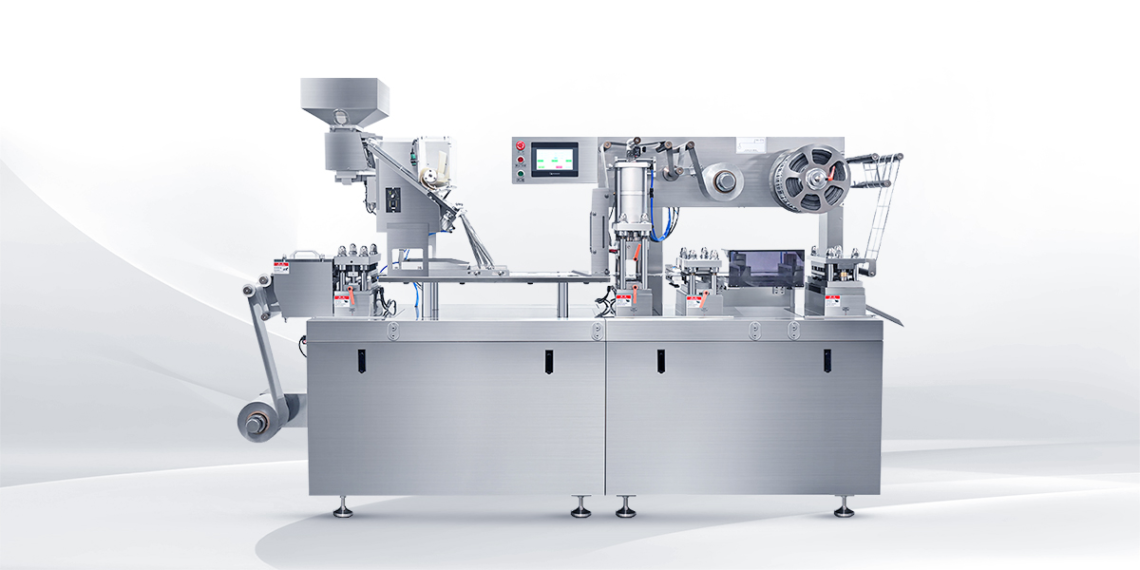
A blister packing machine is an essential piece of equipment used to package products in individual cavities sealed with a backing material. These machines are widely used in pharmaceutical, medical, food, electronics, and consumer goods industries. They provide an efficient way to protect products while creating clean, organized, and attractive packaging.
Modern blister packing machine can perform several operations automatically, including forming cavities, feeding products, sealing, cutting, and printing. This automation helps manufacturers improve production speed and maintain consistent packaging quality.
Choosing the right machine requires an understanding of packaging materials, production capacity, product characteristics, and required automation. This guide explains the working process, benefits, applications, and important considerations when selecting a blister packing machine.
What Is a Blister Packing Machine?
A blister packing machine is an automated or semi-automatic packaging system designed to place products inside formed cavities and seal them with a suitable backing material.
The cavity is commonly made from plastic film or aluminum, while the backing may consist of aluminum foil, paperboard, or another compatible material.
The machine creates a protective package around each individual product. This design allows users to see the packaged item in many applications while keeping it protected from handling and environmental exposure.
Blister packaging is especially common when products need to be separated into individual units.
How Does a Blister Packing Machine Work?
The blister packing process usually begins with a roll of packaging material. The machine feeds the material through a forming station, where heat or pressure creates individual cavities.
Products are then placed into these cavities. Depending on the machine design, product feeding can be manual, automatic, or controlled through specialized feeding systems.
After the products are positioned correctly, the machine places a backing material over the formed cavities. Heat, pressure, or another sealing method joins the backing to the blister material.
The sealed sheet then moves toward a cutting station. Individual packages or groups of packages are separated according to the required dimensions.
Some advanced machines can also perform printing, coding, inspection, and rejection operations during the same production cycle.
Main Components of a Blister Packing Machine
A blister packing machine contains several components that work together to complete the packaging process.
The forming station creates cavities in the packaging material. Its design depends on the material and shape of the product.
The product feeding system places items into the cavities. Accurate feeding is important because missing or incorrectly positioned products can result in defective packages.
The sealing station joins the blister material and backing material. Consistent temperature and pressure are important for reliable seals.
The cutting station separates finished packages according to the required format.
Other components may include control panels, sensors, conveyors, printing systems, inspection cameras, and safety guards.
Different Types of Blister Packing Machines
Blister packing machines are available in different configurations. The appropriate type depends on production requirements and product characteristics.
Manual or semi-automatic machines are suitable for smaller operations. They require more operator involvement but can offer flexibility for limited production quantities.
Fully automatic machines perform most packaging operations with minimal manual intervention. They are generally designed for continuous production and higher output.
Rotary blister machines use rotating tooling to perform different stages of the packaging process. They can provide efficient operation for certain high-volume applications.
Flat-forming machines use flat tooling and can be suitable for products that require specific cavity shapes or packaging formats.
Packaging Materials Used in Blister Machines
The choice of packaging material is an important part of blister packaging. Different products require different levels of protection.
Plastic films such as PVC and other specialized materials may be used to create transparent cavities. Some applications require materials with stronger barrier properties.
Aluminum foil is commonly used as a backing material because it can provide effective protection against light, moisture, and other environmental factors when properly specified.
Paperboard can also be incorporated into certain blister packaging designs, especially when branding and printed information are important.
Material selection should consider product sensitivity, storage conditions, sealing compatibility, appearance, and regulatory requirements.
Benefits of Using Blister Packaging Equipment
A blister packing machine can provide several advantages for manufacturers. One major benefit is packaging consistency. Automated equipment can produce packages with similar cavity dimensions and sealing quality.
Blister packaging can also help protect products from physical handling. Individual cavities keep products separated and organized.
Other benefits include:
- High production efficiency
- Consistent package appearance
- Accurate product positioning
- Reduced manual handling
- Flexible package designs
- Easy product identification
- Efficient use of packaging materials
- Compatibility with automated inspection
The transparent nature of many blister packs can also allow customers to view the packaged product before purchase.
Applications of Blister Packing Machines
Blister packing machines are used across numerous industries.
The pharmaceutical industry commonly uses blister packaging for individual doses and other packaged products. The packaging format can help organize units and provide information through printed labels or backing materials.
Medical and healthcare products may also use blister packaging when individual protection and easy identification are required.
Consumer goods companies use blister packs for small products such as accessories, hardware, and personal items.
Other applications can include:
- Electronics accessories
- Small tools
- Stationery products
- Food items
- Household products
- Personal care products
- Industrial components
The machine format can be customized according to the product’s dimensions and packaging requirements.
Automatic and Semi-Automatic Machines
The choice between automatic and semi-automatic equipment depends largely on production volume and available labor.
Semi-automatic machines can be useful for businesses with moderate production requirements. Operators may manually load products while the machine handles forming, sealing, and cutting.
Fully automatic equipment can integrate feeding, forming, sealing, cutting, inspection, and coding into one production line.
Automation can reduce repetitive manual work and improve output consistency. However, businesses should consider initial investment, maintenance requirements, available space, and expected production volume before selecting a system.
Factors Affecting Machine Performance
Several factors can influence the performance of a blister packing machine.
Product dimensions are important because the feeding system and cavity design must accommodate the product correctly.
Packaging material also affects forming and sealing. Materials must be compatible with the machine’s temperature, pressure, and tooling requirements.
Production speed should be matched to the manufacturer’s actual requirements. Running equipment beyond suitable operating conditions can affect quality and reliability.
Machine setup and operator training also matter. Correct settings help maintain consistent forming, feeding, sealing, and cutting.
Importance of Sealing Quality
Sealing is one of the most important stages of blister packaging. A poor seal can allow contamination or environmental exposure to reach the packaged product.
The sealing process depends on factors such as temperature, pressure, dwell time, material compatibility, and tooling condition.
Manufacturers should establish suitable sealing parameters and monitor them throughout production.
Regular inspection can identify weak seals, wrinkles, incomplete bonding, or other defects. Automated inspection systems may also be used in advanced production lines.
Consistent sealing helps improve package integrity and overall product presentation.
Maintenance and Cleaning Requirements
Regular maintenance helps keep a blister packing machine operating efficiently. Components should be inspected according to the manufacturer’s maintenance schedule.
Forming tools, sealing plates, feeding mechanisms, cutting systems, sensors, and conveyors may require regular cleaning or adjustment.
Operators should also check for signs of wear. Damaged tooling can affect cavity dimensions, sealing quality, and cutting accuracy.
Proper cleaning is particularly important in industries with strict hygiene requirements. A well-maintained machine can reduce unexpected downtime and support consistent production.
How to Choose the Right Blister Packing Machine
Businesses should evaluate several factors before purchasing a blister packing machine.
First, consider the type and dimensions of the products being packaged. The machine should accommodate the required cavity size and feeding method.
Next, determine the desired production speed. A small operation may not need the same capacity as a large manufacturing facility.
Packaging materials should also be considered. The selected machine must be compatible with the intended forming and sealing materials.
Other factors include:
- Machine automation level
- Available floor space
- Tooling flexibility
- Changeover time
- Maintenance requirements
- Safety features
- Inspection capabilities
- Technical support
- Total operating cost
Selecting equipment based on actual production requirements can provide better long-term value.
Improving Packaging Efficiency
Manufacturers can improve efficiency by optimizing machine settings and reducing unnecessary downtime. Proper operator training is an important first step.
Fast and organized changeovers can also increase productivity when several products or package sizes are manufactured on the same machine.
Preventive maintenance can reduce unexpected breakdowns. Keeping spare wear components available may further shorten repair times.
Automation can provide additional efficiency by integrating product feeding, inspection, coding, and packaging operations.
Monitoring production data can help manufacturers identify bottlenecks and improve machine utilization over time.
Conclusion
A blister packing machine provides an efficient solution for packaging individual products in protective and organized cavities. Modern equipment can perform forming, feeding, sealing, cutting, inspection, and coding operations with high levels of consistency.
The right machine depends on product characteristics, packaging materials, production volume, automation requirements, and available space. Proper maintenance, operator training, and quality monitoring are equally important for reliable performance.
For manufacturers seeking efficient and consistent packaging, a well-selected blister packing machine can improve productivity while delivering professional-looking packages and dependable product protection.