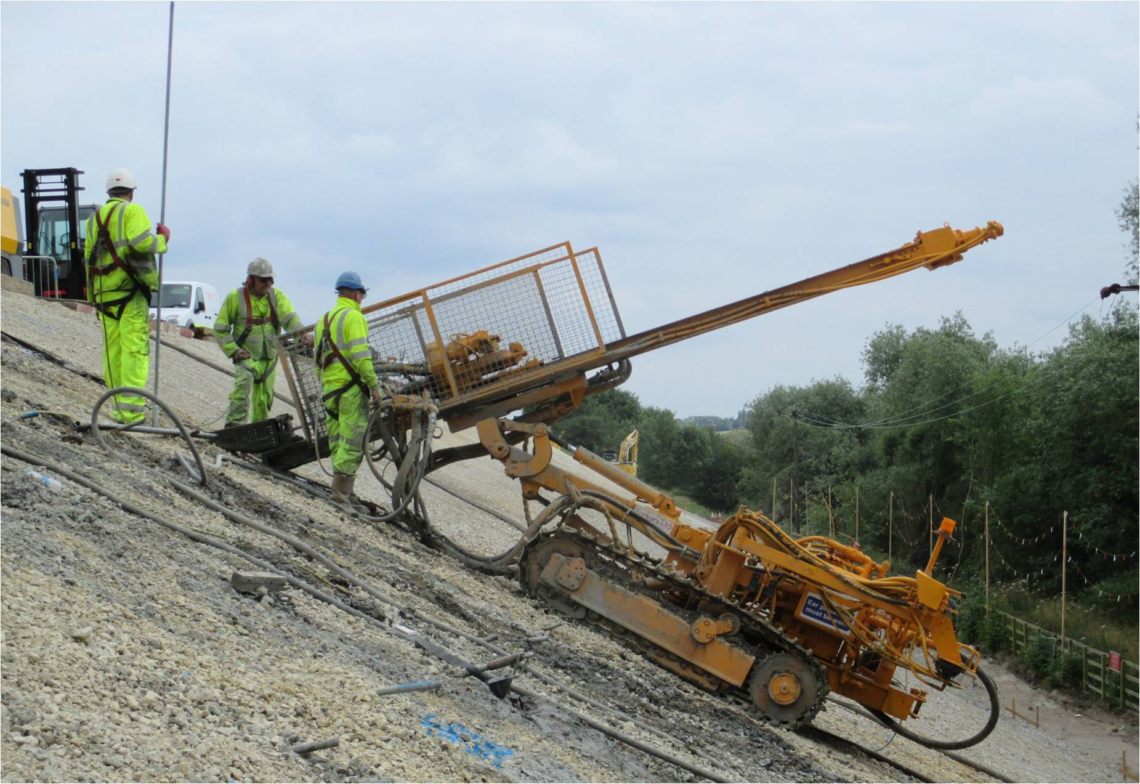
Soil stability is essential for the success of any construction project. Whether constructing highways, retaining walls, bridges, or commercial buildings, unstable soil can lead to costly delays and safety hazards. This is where a soil nailing contractor plays a vital role. Soil nailing is an advanced geotechnical engineering technique used to reinforce and stabilize soil slopes and excavations. By installing steel reinforcement bars into the ground, contractors create a stable structure capable of supporting heavy loads and preventing soil movement.
If you are planning a construction project that involves deep excavations or unstable slopes, understanding the role of a soil nailing contractor can help you make informed decisions. This guide explains the process, benefits, applications, and factors to consider when hiring the right contractor.
What Is a Soil Nailing Contractor?
A soil nailing contractor is a construction professional specializing in reinforcing and stabilizing soil using steel bars known as soil nails. These contractors work on projects where natural ground conditions are not strong enough to safely support excavations, slopes, or retaining walls.
The contractor works alongside geotechnical engineers to develop a reinforcement plan based on soil investigations, load requirements, and environmental conditions. Their responsibilities include drilling, inserting steel bars, grouting, testing, and applying protective wall facings.
Professional soil nailing contractors follow strict engineering standards to ensure long-term structural safety. They also coordinate with project managers and engineers to complete projects efficiently while maintaining compliance with local building codes.
How Soil Nailing Works
Soil nailing strengthens existing soil by installing steel reinforcement bars into the ground. These bars are inserted into drilled holes and secured with cement grout. Once cured, the grout bonds the steel bars to the surrounding soil, creating a reinforced mass that resists movement.
Construction usually begins by excavating a small section of soil. After excavation, workers drill holes into the exposed surface at predetermined angles. Steel bars are then inserted into these holes before being filled with grout.
Once the reinforcement is complete, contractors apply a facing system such as reinforced shotcrete or concrete panels to protect the soil surface. This process continues in stages until the entire excavation or slope has been stabilized.
The result is a durable retaining system that significantly improves slope stability while minimizing ground movement.
Benefits of Hiring a Professional Soil Nailing Contractor
Working with a qualified soil nailing contractor offers numerous advantages for construction projects.
One major benefit is improved safety. Reinforced soil reduces the risk of landslides, excavation collapse, and structural failure.
Another important advantage is cost savings. Compared with traditional retaining wall systems, soil nailing often requires less excavation, fewer construction materials, and shorter project timelines.
Professional contractors also provide customized solutions based on site conditions. Rather than using a standard approach, they analyze the soil and design reinforcement that matches the project’s requirements.
Other key benefits include:
- Faster project completion
- Lower environmental impact
- Increased structural durability
- Minimal disturbance to surrounding areas
- Reduced long-term maintenance costs
- Better performance in limited working spaces
These advantages make soil nailing one of the most efficient ground stabilization methods available today.
Common Applications of Soil Nailing
Soil nailing has become a preferred stabilization method across many industries.
Typical applications include:
- Highway slope stabilization
- Railway embankments
- Deep foundation excavations
- Bridge approaches
- Retaining wall construction
- Tunnel portals
- Landslide repairs
- Basement excavations
- Residential hillside developments
- Commercial building foundations
Because soil nailing adapts well to different site conditions, it is commonly used in both urban and rural construction projects.
An experienced soil nailing contractor evaluates each project’s soil conditions before selecting the most appropriate reinforcement strategy.
Equipment Used in Soil Nailing Projects
Successful soil nailing projects depend on specialized construction equipment.
Common machinery includes:
- Hydraulic drilling rigs
- Rotary drilling machines
- Air compressors
- Cement grout mixing systems
- High-pressure grout pumps
- Excavators
- Shotcrete spraying equipment
- Survey instruments
- Load testing equipment
Modern equipment improves drilling accuracy, installation speed, and worker safety. Regular equipment maintenance also reduces downtime and ensures consistent construction quality.
The Soil Nailing Installation Process
Every soil nailing project follows a carefully planned installation sequence.
Site Investigation
Engineers first analyze soil conditions through geotechnical surveys and laboratory testing.
Excavation
Workers excavate the soil in controlled stages rather than removing the entire slope at once.
Drilling
Specialized drilling equipment creates holes at precise depths and angles according to engineering specifications.
Nail Installation
Steel reinforcement bars are inserted into the drilled holes.
Grouting
Contractors inject cement grout to bond the steel nails securely with the surrounding soil.
Wall Facing
After the grout cures, reinforced shotcrete or concrete panels are applied to protect the exposed surface.
Quality Testing
Engineers perform pull-out tests and inspections to verify that every installed nail meets structural requirements.
This systematic approach ensures maximum ground stability throughout the project.
Why Experience Matters When Choosing a Contractor
Ground stabilization requires specialized engineering knowledge and construction expertise.
An experienced soil nailing contractor understands how different soil types behave under varying environmental conditions. They can identify potential risks before construction begins and recommend the most effective reinforcement strategy.
Experienced contractors also maintain strict quality control throughout every stage of the project. They conduct regular inspections, monitor installation accuracy, and ensure compliance with engineering standards.
Furthermore, experienced teams communicate effectively with engineers, architects, and project managers, helping projects stay on schedule and within budget.
Choosing a reputable contractor greatly reduces construction risks and improves long-term performance.
Factors That Affect Soil Nailing Costs
Several factors influence the total cost of a soil nailing project.
The size of the excavation is one of the primary cost drivers. Larger projects require more steel reinforcement, grout, labor, and equipment.
Other important cost factors include:
- Soil conditions
- Rock formations
- Groundwater levels
- Nail length
- Nail spacing
- Excavation depth
- Site accessibility
- Material prices
- Equipment requirements
- Project duration
Although every project is different, soil nailing often delivers excellent long-term value due to its durability and low maintenance requirements.
How to Choose the Best Soil Nailing Contractor
Selecting the right soil nailing contractor is essential for project success.
Before hiring a contractor, consider the following:
- Years of industry experience
- Professional certifications
- Qualified engineering team
- Previous project portfolio
- Modern construction equipment
- Strong safety record
- Positive customer reviews
- Transparent pricing
- Quality assurance procedures
- Warranty for completed work
Always request references and ask about similar projects the contractor has successfully completed.
The lowest price is not always the best option. A contractor with proven expertise often delivers higher-quality results and fewer long-term issues.
Future Trends in Soil Nailing Technology
Technology continues to improve the efficiency of soil stabilization.
Many contractors now use digital monitoring systems that provide real-time information about soil movement and structural performance. These systems allow engineers to detect changes early and make adjustments when necessary.
Building Information Modeling (BIM) has also improved project planning by enabling teams to visualize underground reinforcement before construction begins.
Corrosion-resistant reinforcement materials and environmentally friendly grout mixtures are becoming increasingly common. These innovations improve durability while reducing environmental impact.
Automation, GPS-guided drilling equipment, and artificial intelligence are expected to further increase construction accuracy in future soil nailing projects.
Frequently Asked Questions
What is a soil nailing contractor?
A soil nailing contractor specializes in stabilizing slopes, excavations, and retaining structures using steel reinforcement bars and cement grout.
Where is soil nailing commonly used?
It is commonly used on highways, bridges, retaining walls, tunnels, commercial developments, and residential hillside construction.
Is soil nailing cost-effective?
Yes. Soil nailing generally requires less excavation and fewer construction materials than traditional retaining walls, making it an economical solution.
How long does a soil nailing system last?
With proper design, installation, and corrosion protection, soil nailing systems can perform effectively for several decades.
How do I select the right contractor?
Choose a contractor with extensive experience, qualified engineers, modern equipment, excellent safety practices, and positive client references.
Conclusion
Hiring a professional soil nailing contractor is one of the best ways to ensure the stability and safety of construction projects involving slopes or deep excavations. Soil nailing is a reliable, cost-effective, and environmentally friendly solution that reinforces existing ground without extensive excavation. From project planning and drilling to grouting and quality testing, experienced contractors deliver durable stabilization systems designed to meet modern engineering standards. By selecting a knowledgeable contractor with proven expertise and advanced equipment, you can improve project safety, reduce long-term maintenance costs, and achieve successful construction outcomes.