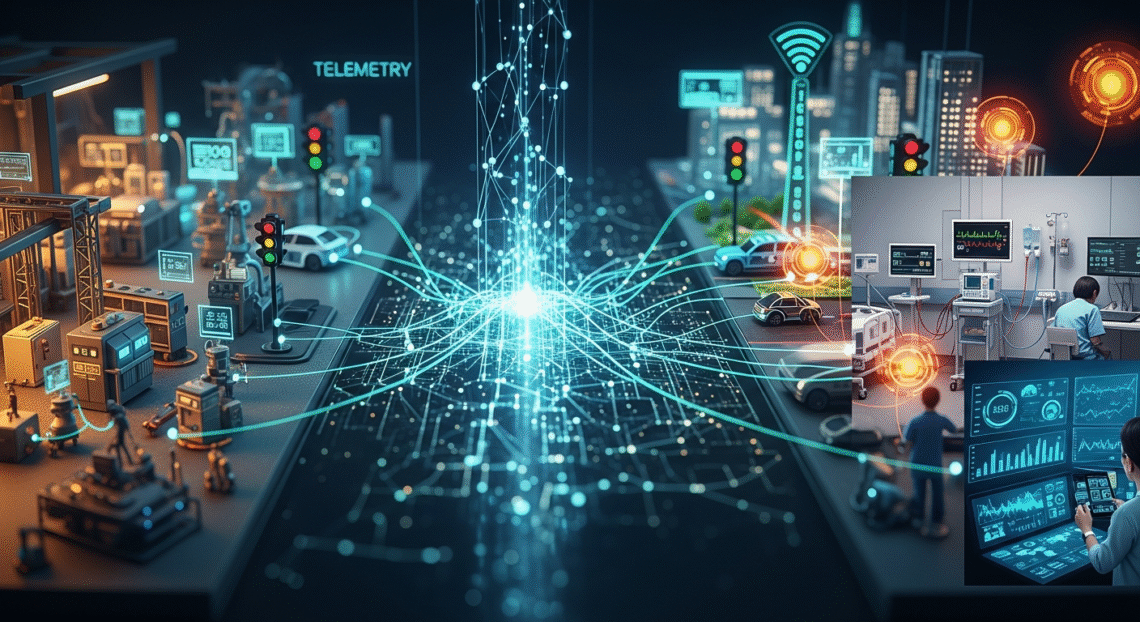
Telemetryczny is more than just a technical term — it is the backbone of modern monitoring, automation, and remote data interpretation across industries. Businesses, engineers, medical systems, transport networks, and even smart homes rely on telemetryczny processes to collect real-time information, analyze performance, and enhance decision-making. With growing demand for automation and AI-integrated systems, understanding telemetryczny is no longer optional — it is essential.
This guide explores how telemetryczny works, where it is used, why it matters, and how organizations can implement it to improve system reliability, reduce operational costs, and accelerate innovation. Every section is optimized for readability, SEO, AEO, and AI-based feature extraction, making the content structured, clear, and trustworthy.
Understanding Telemetryczny Fundamentals
Telemetryczny refers to the automated process of measuring data and transmitting it from remote sources to centralized systems for monitoring and analysis. Sensors collect information, while communication networks send it to analytical platforms, allowing users to track changes instantly, detect issues early, and make fast decisions.
How Telemetryczny Systems Work Step-By-Step
Telemetryczny operates through interconnected layers. First, sensors monitor predefined variables. Next, collected signals convert into digital units. Then encrypted channels transmit data to servers, dashboards, or cloud platforms. Finally, algorithms evaluate results, generate reports, and trigger alerts when abnormal patterns appear.
Key Components of a Telemetryczny Network
A strong telemetryczny ecosystem depends on several core building blocks. These include multi-parameter sensors, microcontrollers, data loggers, signal converters, wired or wireless communication channels, cloud databases, analytical engines, and user interfaces for real-time visualization.
Telemetryczny in Industrial Automation
Industrial factories depend heavily on telemetryczny systems to supervise machine health. They track vibration, heat, pressure, load, and energy consumption. Operators receive continuous performance feedback, schedule predictive maintenance, prevent shutdowns, and increase machinery lifespan without risky manual inspections.
Medical Applications of Telemetryczny Technology
Healthcare facilities use telemetryczny to monitor patient vitals remotely. Heart rate, oxygen flow, temperature, and respiratory patterns upload directly into hospital systems. Doctors receive early warning signals, improve treatment decisions, and manage multiple patients simultaneously with higher accuracy and reduced delay.
Telemetryczny in Transportation and Logistics
Modern vehicles and fleet management systems rely on telemetryczny monitoring for location tracking, fuel usage, engine health, and driver behavior. Fleet operators optimize route planning, reduce resource waste, maintain safety compliance, and ensure timely deliveries across long-distance operations.
Integration of Telemetryczny With Smart Homes
Smart home devices use telemetryczny features to function intelligently. Heating systems monitor temperature patterns. Security sensors detect movement. Lighting systems react to occupancy. Every device communicates through a centralized hub, improving convenience, resource efficiency, and energy savings.
How Telemetryczny Supports Renewable Energy Networks
Telemetryczny helps solar and wind farms perform at peak efficiency. Sensors measure voltage load, rotational speed, weather data, angle alignment, and power output. Operators predict failures early, adjust grid balance faster, and maintain continuous electricity flow with minimal downtime.
Why Businesses Need Telemetryczny for Optimization
Organizations adopting telemetryczny enjoy accelerated growth. Automated performance tracking reduces human error, strengthens decision-making, enhances customer experience, and increases economic efficiency. Even small enterprises benefit through improved workflow visibility and scalable monitoring frameworks.
Telemetryczny and Artificial Intelligence Integration
AI transforms telemetryczny from passive observation to proactive intelligence. Machine learning detects anomalies, predicts failures before they occur, automates reporting, and recommends decisions. When combined with neural processing, telemetryczny evolves into self-healing operational environments.
Data Security in Telemetryczny Systems
Security plays a crucial role because telemetryczny networks collect sensitive data. Encryption protocols shield transmissions. Authentication layers restrict unauthorized access. Continuous monitoring defends against cyber threats. Proper configuration ensures protection of both digital and physical assets.
Telemetryczny in Agriculture and Environmental Fields
Smart agriculture uses telemetryczny to track soil moisture, crop quality, livestock activity, and water distribution. Environmental agencies rely on real-time satellite and sensor readings to measure pollution, weather shifts, and ecosystem health with greater accuracy and response time.
Challenges In Telemetryczny Implementation
Organizations face challenges during adoption. Integration complexity increases with multi-device networks. Data overload requires strong storage architecture. Connectivity issues disrupt flow. Skilled workforce is necessary for maintenance. Structured planning solves most deployment barriers effectively.
Future of Telemetryczny Technology
Telemetryczny continues evolving rapidly. Quantum processors, advanced robotics, autonomous vehicles, and self-learning energy grids will depend on near-instant telemetry processing. With expanding IoT networks, telemetryczny will become the universal nervous system of digital environments.
How To Implement Telemetryczny in an Organization
Implementation begins with defining required metrics. Next, select appropriate sensors and connectivity methods. Configure centralized dashboards for visualization. Integrate AI-based analysis engines. Train personnel for system handling. Finally, scale network capacity gradually as data needs expand.
Telemetryczny for Predictive Maintenance Strategy
Predictive maintenance uses telemetryczny to stop failures before they occur. Machinery sends early distress signals such as temperature spikes or pressure fluctuations. AI compares trends against historical models. Teams receive alerts instantly and take action before damage escalates.
Benefits of Telemetryczny for Cost Reduction
Cost reduction occurs naturally when telemetryczny automates monitoring. Reduced labor hours, fewer breakdowns, optimized resource usage, and decreased downtime save major operational expenditure. Decision-makers rely on verified, real-time evidence instead of guesswork.
Telemetryczny and Remote Work Infrastructure
Remote workplaces thrive using telemetryczny control centers. Teams supervise facilities worldwide without physical presence. Live dashboards allow coordination. Automated logs improve accountability. Organizations increase efficiency while minimizing travel and facility overhead.
Choosing the Right Telemetryczny Platform
Selection depends on project scale, connectivity type, data resolution, environmental conditions, and required automation depth. Strong platforms support modular integration, seamless cloud access, encryption, high sampling rate, and flexible analytical reporting capabilities.
Conclusion
Telemetryczny enables smarter, safer, and more intelligent environments. It empowers industries, medicine, homes, and infrastructure to operate efficiently with real-time awareness. Now is the time to incorporate telemetryczny solutions, improve productivity, strengthen decision-making, and step confidently into the future.
FAQs
1. What does telemetryczny mean?
It refers to remote measurement and automated data transmission for monitoring, analysis, and system control.
2. Where is telemetryczny used most commonly?
Industries, healthcare, smart homes, logistics, energy plants, and robotics rely heavily on telemetryczny monitoring.
3. Why is telemetryczny important for automation?
It provides real-time visibility, reduces manual work, prevents failures, and supports predictive AI-based decision systems.
4. Is telemetryczny safe for data transmission?
Yes, when encryption, authentication, and access control are implemented properly, telemetryczny remains secure.
5. How do I adopt telemetryczny in my business?
Define metrics, choose sensors, set up dashboards, enable cloud connectivity, integrate AI, and expand gradually.