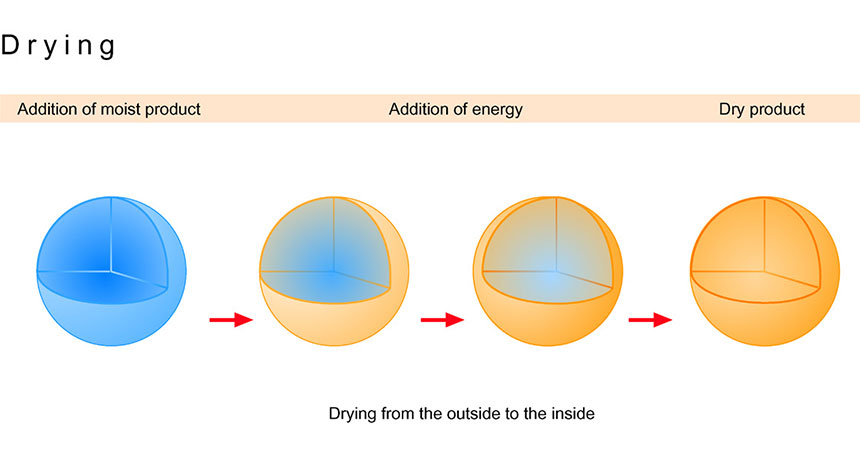
When a pipe bursts or a storm floods a basement, the immediate reaction for most homeowners is to grab every floor fan in the house and aim them at the puddles, though a timely call for flood damage cleanup is the only way to address the saturation hidden deep within the building materials. It feels intuitive: moving air dries things out, right? While that is technically true on the surface, structural drying is less about a “breeze” and more about a complex dance of thermodynamics and atmospheric pressure. If you only dry what you can see, you are essentially leaving a ticking time bomb of microbial growth hidden within your walls.
The Deceptive Simplicity of Surface Drying
Water does not just sit on top of materials; it migrates deep into the porous “bones” of a building through capillary action. To understand why a standard household fan fails, we have to look at how moisture behaves when it is trapped inside dense materials like hardwood, drywall, or concrete.
The Myth of the Quick Fix
Many people believe that if a carpet feels dry to the touch, the job is done. However, water often wicks upward into the wall studs and insulation. A standard fan might evaporate the surface moisture, but it lacks the “static pressure” required to pull deep-seated dampness out of structural members. Without professional intervention, this trapped moisture creates a stagnant, high-humidity microclimate behind your baseboards.
Why Airflow is Only One Piece of the Puzzle
Air movement is certainly necessary to whisk away the “boundary layer” of saturated air sitting on a wet surface. But if the air in the room is already humid, that fan is just moving wet air over wet surfaces. This is where the science of psychrometrics comes into play, as true drying requires a controlled balance of airflow, temperature, and dehumidification to be effective.
Psychrometrics: The Secret Language of Drying
The restoration industry relies on a field of study called psychrometrics, which is the science of the physical and thermodynamic properties of gas-to-vapor mixtures. Professionals do not just “dry” a room; they manipulate the environment to force water out of solid objects and into the air where it can be captured and removed.
Understanding Vapor Pressure Differential
The most critical concept in structural drying is vapor pressure. Water always moves from areas of high pressure (wet materials) to areas of low pressure (dry air). If the air in your room is not dry enough, the vapor pressure stabilizes, and the drying process stops completely, regardless of how many fans are running. Professionals use industrial-grade desiccant or refrigerant dehumidifiers to keep the air’s vapor pressure significantly lower than the material’s vapor pressure, “pulling” the moisture out like a vacuum.
The Role of Thermal Energy
Temperature acts as a catalyst in this equation. Warm air can hold more moisture than cold air, and heating the wet structural elements increases the internal vapor pressure of the water molecules, making them want to escape faster.
Did you know that water can actually travel upward inside a brick wall for several feet due to capillary action, defying gravity entirely? This is why professional teams use infrared cameras to track the “ghost” of moisture that the human eye cannot detect.
Why Professional Remediation is Non-Negotiable
Effective restoration is a high-stakes engineering task that requires constant monitoring and adjustment. When you work with a dedicated mold removal team, you are not just paying for equipment; you are paying for the expertise to ensure that your home does not become a breeding ground for spores. A specialized crew understands how to create a “drying envelope” that isolates the damage, preventing the spread of contaminants while aggressively extracting moisture from the most stubborn materials. These experts utilize moisture meters with long probes to reach deep into the subfloor, ensuring that the structural integrity of the home remains intact. By hiring professionals, you mitigate the risk of secondary damage, such as wood rot or structural failure, which can cost tens of thousands of dollars more than the initial drying process.
A truly elite restoration service operates with a level of precision that balances rapid extraction and repairs after a fire-related loss with the delicate preservation of your property’s value. These experts arrive with a sophisticated arsenal of high-capacity air movers and LGR dehumidifiers, but their most valuable tool is the daily data logging they perform to track the “dry standard” of your specific materials. They don’t just guess when a room is finished; they compare the moisture content of the affected areas against unaffected “control” samples in your home to ensure equilibrium has been reached. This meticulous approach prevents the nightmare scenario where a homeowner closes up a wall only to find a massive colony of black mold six months later. Because they prioritize both the science of evaporation and the safety of the inhabitants, these specialists provide a seamless transition from chaos to a certified healthy environment, giving you the peace of mind that comes from knowing the job was handled with technical rigor rather than just a few fans and a hope for the best.
The Invisible Risks of DIY Drying
It is tempting to try and save money by managing a flood yourself, but the hidden costs of failure are often astronomical. Beyond the physical structure, your indoor air quality is at constant risk when moisture lingers.
The 24 to 48 Hour Window
Mold does not wait for a convenient time to grow. It typically begins to colonize within 24 to 48 hours of a water intrusion.
Fun fact: Some mold species are so resilient they can survive in a dormant state for years, waiting for just a single drop of water to reactivate and spread. Professional teams use antimicrobial treatments alongside their drying equipment to ensure that even if the drying takes a few days, the microbial growth is stunted from the start.
Protecting Your Health and Investment
Structural drying is as much about health as it is about carpentry. Professional mold removal teams are trained to identify different categories of water (from “clean” tap water to “black” sewage-contaminated water), each requiring a vastly different safety protocol. Without the proper HEPA filtration and containment strategies, a DIY drying attempt can actually aerosolize bacteria and mold spores, blowing them throughout the rest of your home and into your HVAC system.