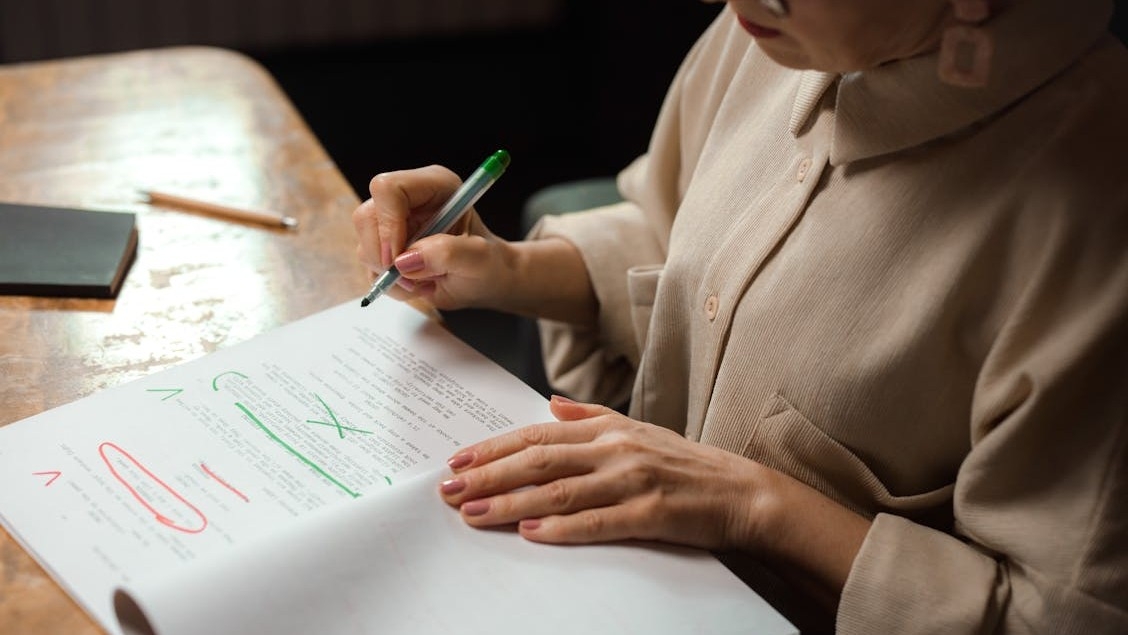
Writing a manuscript requires extensive effort because completion comes only after editing and proofreading. The process of editing enables you to present your ideas through stronger writing methods.
Whenever you are proofreading the content, you only get to know of the mistakes and rectify them to make the content sound good. These errors are spelling errors, grammar errors, and punctuation errors. Students tend to omit this part, and this makes them lose marks or even have their manuscript rejected.
The processes of editing and proofreading create an impression of professional expertise and self-assuredness. The simple steps will help you create a clean, correct, and readable document for your manuscript submission.
Understand the Difference between Editing and Proofreading
In the process of improving your content in your manuscript, its structure, and the general reading process, it can be referred to as editing. During the process of proofreading, you correct yourself by making spelling mistakes and grammatical mistakes. Both processes have equal importance for your work. The sequence of editing work should take place before you begin proofreading work. The process of proofreading before editing work will result in missing the identification of major issues that occur later time.
Take a Break before Editing
After finishing your writing, you should complete your work by waiting for a brief period before you begin to edit. Your brain needs time to relax. The process of returning to your work enables you to identify errors with greater accuracy. The practice of editing immediately after completing a writing task makes it difficult to identify errors. A brief pause of 30 minutes enables you to discover mistakes with greater success.
Edit for Structure and Clarity First
First, check if your ideas are clear and organized. Every paragraph needs to present a single main concept. Your writing should create a continuous flow of information that connects different ideas. You should rewrite any sentence that creates confusion for the reader. The manuscript’s clear structure enables readers to navigate the text while understanding its content. If you need extra support, then you can always hire book writers to simplify this task.
Check for Consistency
Writing involves keeping a good level of stylistic features in writing. Test whether you use similar tenses, tones, and formats. You need to confirm that all three elements of your document, which include headings, fonts, and spacing, maintain an identical appearance. You need to verify that all three elements of your document, which include dates, numbers, and references, follow identical formatting rules. The use of consistent elements throughout your work creates a professional appearance.
Proofread for Grammar and Spelling
You should check your writing for any grammatical, spelling, and punctuation mistakes. There are misspelled words in the text, a lack of commas, and incomplete sentences. Read the material with dedication while you examine every detail. The computer tools cannot identify all mistakes, so you should not depend on them completely. Proofreading enables you to discover minor mistakes that will lead to lower grade results.
Use Tools but Don’t Fully Rely on Them
Grammarly and Word spell check functions as helpful tools, but they lack complete accuracy. The system can miss errors and recommend inappropriate solutions. The system should serve you as an assistant while you make the final decision about your work. The process requires you to check your document manually after using the tool to confirm its accuracy.
Read Your Manuscript Aloud
Your writing appears awkward because you need to correct missing words. You should rewrite the sentence because it sounds strange. The process of reading aloud helps you identify words that appear multiple times and concepts that lack clarity. The method enables you to discover reading errors that you would not detect during silent reading.
Get a Second Opinion
You should request your manuscript to be read by a friend, classmate, or teacher. The other individual is going to identify mistakes in your work that you could not notice. They are also able to determine the clarity and understandability of what you write. Feedback is the most successful way to improve your work.
Final Formatting Check
Before submission, you need to examine the complete layout. You should use the set guidelines of your margins, font, and spacing. The title page, headings, and page numbers should be revised. You should ensure that your referencing and citations are correct. Your clean format demonstrates your professional attitude and dedication to your work.
Sometimes the task of editing or proofreading the manuscript is too hectic. In that case, you can always get help from affordable ebook-writing services. These services have been proven to assist authors and make the publishing process easier.
Conclusion
The final steps to complete your manuscript require editing and proofreading. The simple steps that you will follow enable you to enhance your writing while removing errors and achieving a professional appearance. Your final manuscript will achieve clarity and confidence when you take the time to review your work.