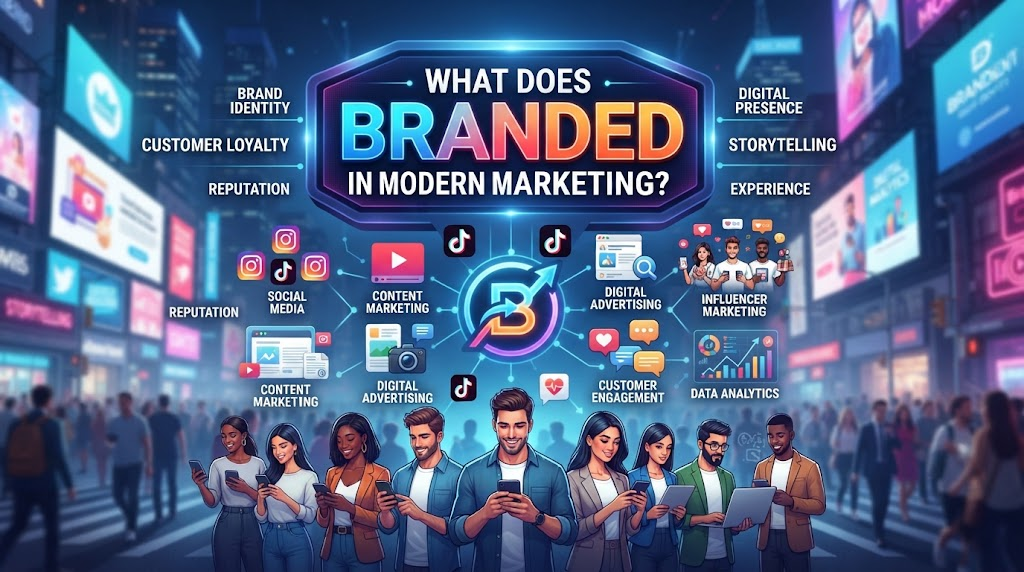
Have you ever wondered why you pick one snack over another at the store? The secret often comes down to how a company presents itself. When something is branded, it means a business has placed its unique identity on a product, service, or message. This identity helps you spot your favorite items instantly on a crowded shelf. It includes special logos, colors, and values that make a company stand out.
Understanding how a branded product works is simple once you look closely at daily life. Companies spend a lot of time creating a recognizable style so that customers feel comfortable buying from them. When you see a familiar logo, you know what kind of quality to expect. This trust makes shopping easier for everyone. In this complete guide, we will explore everything about branded items, how companies build strong reputations, and why smart businesses focus on quality messaging every day.
Table of Contents
The Basics of Branded Products and Services
A branded item is much more than just a name printed on a box. It represents a promise made by a company to its loyal customers. When a company offers a branded item, it tells the buyer that the product meets specific quality standards. People often choose these items because they know and trust the manufacturer behind them.
For example, think about buying a plain white shirt versus a branded shirt with a famous logo. Even if both shirts use soft cotton, the branded shirt often feels more valuable to the buyer. This happens because the company spent years building positive feelings around its name. Customers feel confident when they choose a branded option over an unknown name.
Why Having a Branded Identity Matters for Businesses
Every successful business needs a distinct branded presence to grow in today’s busy market. Without a clear identity, a company blends into the background and gets lost among its competitors. Having a strong branded image helps a business attract new buyers while keeping old customers happy for many years.
When a store carries well-known branded goods, it builds immediate credibility with shoppers. People naturally gravitated toward familiar names because it feels safer than trying unknown items. A business that maintains a clear branded message can set itself apart, explain its mission clearly, and build a community of happy fans who return regularly.
How Branded Content Helps Connect With Customers
Today, companies do not just sell physical goods; they also create helpful videos, stories, and articles. This approach is often called branded content. Instead of pushing hard sales messages, branded content teaches, entertains, or helps readers solve common everyday problems.
Imagine reading a cool recipe blog sponsored by an olive oil maker. That helpful blog is a great example of branded storytelling. It gives you real value without forcing you to buy anything right away. When companies share fun and useful branded stories, customers begin to view the company as a friendly expert rather than just a salesperson.
Key Differences Between Generic and Branded Items
To truly understand how markets work, it helps to compare generic items with a branded alternative. Generic items often come in plain packaging and cost less money. On the other hand, a branded item usually costs a little more because of the design, reputation, and steady testing behind it.
| Feature | Generic Items | Branded Items |
| Packaging | Simple and plain | Custom design and logo |
| Customer Trust | Low or unknown | High and established |
| Price Point | Usually lower cost | Standard or premium price |
| Marketing Support | Very little or none | Strong advertising |
Choosing between generic goods and a branded choice comes down to personal preference. Many shoppers willingly pay extra for a branded item because they trust the company’s promise of consistent quality and friendly customer service.
How to Build a Strong Branded Reputation Step by Step
Building a powerful branded image does not happen overnight. It takes steady effort, honest communication, and reliable products. First, a business must decide what values matter most, such as great customer support, eco-friendly materials, or low everyday prices.
Once those core values are set, every piece of content must share that same branded voice. If a company claims to be friendly, its social media posts and customer phone support must always feel warm and helpful. Over time, this constant effort creates a solid branded reputation that competitors cannot easily copy.
The Role of Visuals in Branded Marketing
Visual elements play a giant role in making a branded business memorable to consumers. Colors, fonts, and logos act as visual shortcuts for our brains. When you see specific colors on a package, you might instantly think of your favorite soft drink or shoe line.
A consistent branded design helps people recognize a store instantly, whether they are looking at a website, a billboard, or a paper flyer. Using the exact same colors and logos across every page creates a professional look. This simple step makes a company appear trustworthy and well-organized to new visitors.
How Branded Experiences Create Loyal Fans
Selling a good product is important, but creating an amazing branded experience is what keeps customers coming back forever. An experience includes how a store looks, how easy its website is to use, and how polite the staff members are when answering questions.
Think about visiting a coffee shop that always plays nice music, smells like fresh beans, and serves drinks in custom branded cups. That pleasant feeling makes you want to return every morning. When companies focus on delivering a wonderful branded experience, casual buyers quickly transform into passionate brand advocates.
Common Mistakes to Avoid with Branded Campaigns
Even smart companies make mistakes when launching a new branded project. One common error is changing logos or messages too often. When a business constantly changes its look, customers get confused and might stop recognizing the branded products altogether.
Another big mistake is failing to listen to customer feedback. If buyers complain about product quality, a company must fix the problem quickly to protect its branded image. Ignoring customers hurts trust fast. Keeping your promises and staying consistent are the two best ways to keep a branded business healthy and strong.
Simple Ways Small Businesses Can Use Branded Marketing
You do not need a huge budget to create a successful branded campaign for a small store. Local businesses can stand out by creating simple logos, using colorful packaging, and sharing helpful tips on social media.
For instance, a local bakery can post short videos showing how they decorate cakes. Using custom branded boxes for every pastry gives customers a delightful unboxing experience at home. These small, thoughtful details prove that any business can build a recognizable branded presence without spending thousands of dollars.
The Future of Branded Content and Storytelling
As technology keeps changing, the way companies share their branded messages evolves too. Today, people love watching short videos, reading clear guides, and interacting with companies directly on mobile devices. Modern branded marketing focuses heavily on honesty, real helpfulness, and personal connections.
Future success belongs to businesses that create authentic branded stories that solve real problems. Readers prefer clear, direct answers over flashy sales pitches. By focusing on helpfulness and honesty, companies can build a solid branded future that grows alongside their audience.
Conclusion
Creating a strong branded presence is the ultimate goal for any business that wants long-term success. From recognizable packaging to helpful online guides, a well-planned identity builds trust with shoppers and makes buying decisions simple. When you focus on honest quality, consistency, and clear communication, your business naturally stands out from the crowd. Start applying these simple tips today to grow your own memorable image!
Frequently Asked Questions (FAQs)
1. What does the term “branded” mean in simple words?
It means a product, service, or piece of content is created by a specific company and carries its unique name, logo, and design style to show ownership and quality.
2. Why do people prefer buying a branded product over generic items?
Shoppers often choose these items because they know what quality to expect. Famous names offer peace of mind, reliable customer support, and consistent experiences.
3. What is branded content?
It is helpful or entertaining content—like articles, videos, or podcasts—created by a company to connect with readers naturally without using pushy sales pitches.
4. How can a small business start building a branded identity?
A small business can start by choosing a clean logo, using matching colors on all materials, and delivering polite, reliable customer service every single day.
5. Is a logo the only thing needed for a branded business?
No, a logo is just one visual piece. A full identity also includes company values, customer service style, packaging, and the tone of voice used in messages.
6. Why is consistency important in branded marketing?
Consistency helps people recognize and remember your business easily. Using the same colors, fonts, and message quality builds long-term trust with your audience.
