Falls can happen in a blink. One poorly lit hallway at night, a slippery bath mat, a loose stair runner, and suddenly a normal day turns into a painful recovery. The good news is that you do not need a full remodel to make your home noticeably safer. A handful of targeted upgrades can reduce fall risk fast, especially in the four areas where most trips and slips start: lighting, floors, bathrooms, and stairs.
If you or a loved one is already using in-home care services (or considering them), these upgrades also make a caregiver’s job easier. Clear pathways, better visibility, and safer transitions let care teams focus on support and comfort rather than constantly preventing hazards. Plus, trusted caregivers for aging parents can provide the extra assistance needed to ensure safety throughout the home, adding another layer of peace of mind.
1) Lighting upgrades that instantly make walking safer
Good lighting is not just about comfort. It is about reaction time. When you can clearly see edges, steps, and changes in flooring, your brain makes faster, safer decisions. Lighting fixes are often the quickest, most affordable upgrades, and you can feel the difference the very first night.
Add motion-activated lights where you walk at night
Hallways, bathrooms, and the route from bed to the kitchen are prime spots. Motion lights remove the need to fumble for a switch, which is when many people take a few steps half-blind. Choose warm but bright bulbs, and position lights low enough to illuminate the floor, not just the walls.
Increase brightness in “decision zones”
A decision zone is anywhere you change direction or level: top of stairs, the corner of a hallway, the entryway where shoes and bags pile up. A brighter overhead fixture or a plug-in wall sconce can make obstacles pop visually instead of blending into shadows.
Use contrasting night lights
A simple night light can be even better when it highlights a boundary. Place one near the edge of a step down, near a threshold, or close to the bathroom doorway.
Fun fact: Our eyes can take several minutes to fully adjust to darkness after being in a brightly lit room, which is why night-time trips to the bathroom are a common moment for missteps.
2) Floor fixes that prevent the classic trip and slip
Floors are sneaky because you stop noticing them until something goes wrong. The goal is simple: reduce friction changes and remove anything that can catch a toe. You do not need to strip the whole house. Small changes in key zones get big results.
Remove or secure rugs the right way
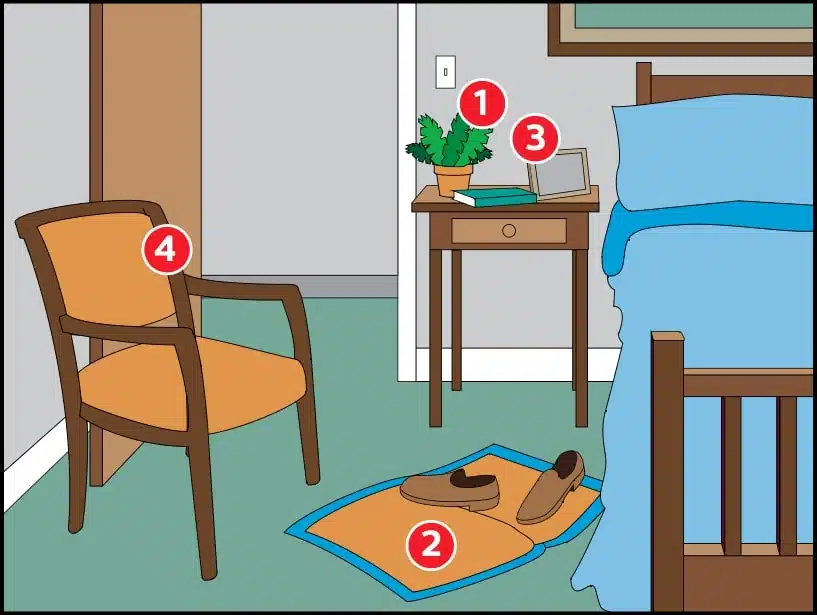
If you love area rugs, keep them, but make them behave. Use a quality non-slip pad that covers most of the rug’s underside, and avoid thick edges that curl. If a rug still slides, it is not “quirky,” it is a hazard.
Create a smooth path through high-traffic areas
Pick one main walking lane through each room and remove clutter from it. Cords, baskets, pet toys, and low stools are the usual suspects. If an in home caregiver is assisting with mobility, that clear lane becomes even more important for safe transfers and steady support.
Reduce slippery flooring surprises
Some cleaners leave floors glossy and slick. If you notice that “ice rink” feeling after mopping, switch to a cleaner made for your specific flooring type and use less product than you think you need. Also, consider adding non-slip strips in spots where water tends to land, like near the kitchen sink.
3) Bathroom upgrades that make the highest-risk room safer
Bathrooms combine water, hard surfaces, tight spaces, and quick movements. That mix is why this room deserves special attention. The best part is that bathroom safety upgrades can be done in layers, starting with the fastest wins.
Install grab bars in the right places
Grab bars are not only for the shower. Put one near the toilet and at the shower entry. Placement matters more than people realize. They should be installed into studs or with proper anchoring hardware, not just screwed into drywall.
Swap the bath mat for a non-slip solution
Many fluffy bath mats slide. Look for mats with rubber backing that grips, or choose quick-dry mats designed for traction. Inside the shower, a non-slip mat or adhesive treads can reduce sudden slips when turning.
Upgrade the shower experience
A handheld shower head plus a shower chair or bench can reduce risky balancing. This is especially helpful when an in home care provider assists with bathing or stands by for safety. It gives both the client and caregiver more control and less scrambling.
Fun fact: Bathroom surfaces are often harder than other areas of the home, which increases the likelihood of injury if a fall happens there compared to a carpeted room.
4) Stair improvements that reduce falls on the spot
Stairs are one of the most unforgiving places to lose footing. Even confident walkers can misjudge a step when lighting is low or the surface is worn. A few upgrades can make stairs feel dramatically more stable.
Add non-slip treads or improve traction
If your stairs are wood or slick material, traction is everything. Non-slip treads, grip tape, or well-fitted stair runners can help, as long as they are installed securely with no loose edges.
Improve handrails, even if you already have them
A sturdy handrail should be easy to grip and continuous from top to bottom. If your rail ends early or is too thick to wrap fingers around, consider replacing it. Adding a second rail on the other side can be a game changer for balance.
Mark the edge of each step
If steps blend together visually, a contrasting strip at the front edge makes depth easier to judge. This is especially helpful for people with reduced vision or depth perception changes.
A quick way to make these upgrades stick long-term
Start with the route you walk most often: bedroom to bathroom, bedroom to kitchen, and the main entry. Fix those first, then expand room by room. If you have in home care services, ask the caregiver to point out any hazards they notice during daily routines. They see the home in action, not just how it looks when everything is tidy.
Most importantly, treat safety upgrades as comfort upgrades too. A brighter hallway, a steadier shower setup, and stairs that feel predictable can make the whole home feel calmer. And that peace of mind is worth a lot.